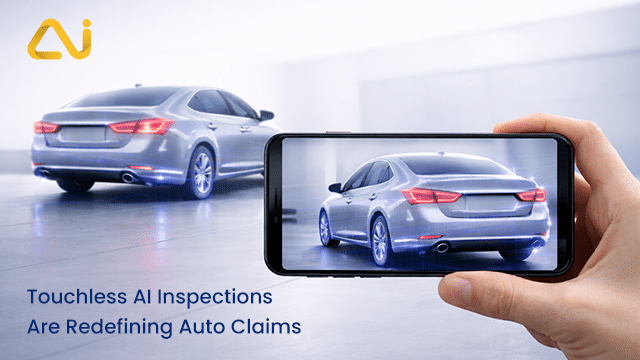
Imagine a world where dropping your car off at a mechanic, returning a rental, or processing an insurance claim takes seconds instead of hours. A world where the traditional walk-around inspection is no longer done by a person with a clipboard, but by an intelligent Automated Vehicle Inspection System (AVIS) that scans a vehicle with medical-grade precision. This isn’t science fiction—it’s quickly becoming the new industry standard.
The automotive ecosystem is rapidly moving away from manual, subjective inspections toward Digital Vehicle Inspections (DVI) powered by high-definition imagery and advanced sensing technologies. From service lanes to rental returns and insurance claims, digital gates are transforming how vehicle condition is captured. However, while high-tech cameras and scanners can see everything, they don’t inherently understand what they see.
That’s where Claim Genius comes in. By applying proprietary AI-driven computer vision to inspection imagery, Claim Genius bridges the critical gap between raw visual data and real financial decision-making. Our technology doesn’t just detect damage—it interprets it, classifies it, and converts it into actionable insights for claims, reconditioning, and valuation.
In this article, we take a deep dive into the pros and cons of Digital Gate Technologies and explore how pairing these platforms with AI-driven claims automation is shaping a faster, more consistent, and more transparent future for the automotive industry.
What Are Digital Gates (Automated Vehicle Inspection Systems)?
Digital Gates, also known as automated inspection tunnels or arches, are drive-through systems equipped with high-resolution cameras, LiDAR, and sensors. They capture a “digital twin” of a vehicle in seconds, identifying scratches, dents, and tire wear that the human eye might miss.
Digital vehicle inspection technologies are rapidly replacing manual, subjective walk-around inspections with automated, camera-based scanning systems. These solutions excel at capturing vehicle condition at scale—some prioritizing safety-grade scanning, others extreme speed, and others industrial-level precision.
However, they all share a common limitation: heavy, expensive, and fixed hardware installations that restrict flexibility and drive up cost.
While these systems are excellent at seeing damage, they often stop short of understanding it. Capturing images is only half the problem—the real value lies in translating visual data into actionable decisions.
This is where Claim Genius is positioned differently. Claim Genius is hardware-agnostic, working with images and videos from any source, including simple mobile devices and existing digital inspection systems. Using proprietary computer vision AI, Claim Genius converts visual data into repair estimates, conditioning insights, reconditioning intelligence, and financial outcomes—without requiring costly infrastructure.
In short, while digital gates focus on inspection capture, Claim Genius delivers the intelligence layer that turns inspections into faster decisions, lower costs, and scalable outcomes across insurance, dealerships, and fleet operations.
The Physical Reality: Installation & Maintenance
While the output of these systems is digital, implementing automated vehicle inspection infrastructure requires careful planning.
Installation & Footprint
These are not simple webcams; they are industrial installations.
- Space Requirements: A typical scanner like the ProovStation measures nearly 3 meters (9.2 ft) in length and requires a dedicated lane. UVeye systems require a perfectly level approach to ensure underbody scans are accurate and distortion-free.
- Power & Connectivity: These systems consume significant power and demand high-speed, stable internet connections to upload large volumes of 4K video data to the cloud in real time.
Maintenance & Environment
Digital eyes need to be kept clean to see clearly.
- The “Dirty Lens” Problem: In dealership service lanes and rental lots, cars bring in mud, snow, and road salt. Sensors and camera lenses require a strict cleaning schedule. If a lens is obscured by mud, the computer vision algorithms might misinterpret it as body damage or fail to detect a dent entirely.
- Calibration: Like any precision instrument, these gates drift over time. Regular calibration is essential to maintain the “Truth Data.” If the sensors aren’t calibrated, a 2mm tire tread might be misread as 4mm, leading to safety liabilities.
- Weather Sensitivity: While robust, extreme weather can affect performance. Heavy rain or snow can obscure cameras, leading to false positives or requiring the system to be paused.
The Missing Link: Why Hardware Needs Claim Genius AI
Today, automotive inspection expectations go far beyond simple damage detection. The industry increasingly demands comprehensive repair and reconditioning estimates that can be acted on immediately. Even with advanced hardware and well-maintained digital gates, these systems primarily generate raw visual data—not decisions. On their own, they don’t translate images into repair estimates that insurers, dealerships, or repair facilities can readily use.
This is where Claim Genius transforms the workflow. Claim Genius serves as the cognitive intelligence layer that sits on top of digital inspection hardware. Being fully hardware-agnostic, the GeniusAPI can ingest images and videos from any source—whether it’s a fixed inspection gate, an automated arch system, or simply a smartphone in a customer’s hand—and convert that data into actionable repair intelligence. In doing so, Claim Genius bridges the critical gap between inspection and decision-making.
How We Accelerate the Process
- Instant Triage: Our GeniusAI analyzes the scan data to immediately classify damage severity. We don’t just see a scratch; we determine if it requires a simple buff or a panel replacement, allowing for immediate routing of the vehicle.
- Damage Detection & Severity: We go beyond simple identification to granularly detect scratches, dents, and tears. This benefits a variety of stakeholders: car owners get transparency, dealerships can accurately assess trade-ins during check-in, and repair shops receive an instant baseline of the work required.
- Before vs. After Comparison: Our system can compare scans taken at two different points in time. A vehicle can be driven through a digital gate before a rental period or repair job, and again after. This instantly verifies if new damage occurred during a rental, or confirms that a repair shop has successfully fixed the vehicle to the manufacturing standard.
- Claim Genius delivers end-to-end repair intelligence, going beyond damage detection to provide complete repair-versus-replace decisions, including labor times, paint material requirements, and every critical line item a professional surveyor evaluates.
Designed as pocket technology, Claim Genius works seamlessly on handheld mobile devices while integrating effortlessly with digital inspection gates. Together, this approach can drive up to a 50% reduction in claim settlement time and overall processing costs.
Stakeholder Benefits: Who Wins?
The convergence of Digital Gates and Claim Genius creates a touchless claims ecosystem with advantages across the automotive value chain.
For Car Owners
- Transparency: No more taking a mechanic’s word for it. You see exactly what the scanner sees—red alerts for safety issues and green for good health.
- Speed: Insurance claims automation means settlements that used to take weeks can now be settled in hours. Drop your car off, get scanned, and get paid.
- Fair Trade-Ins: Get the true market value for your vehicle based on objective vehicle condition reports, not a guess.
For Dealerships
- Revenue Growth: Automated tire and alignment checks can increase service revenue by 50–100%. The objective data builds customer trust, making upsells easier.
- Risk Reduction: Avoid overpaying for trade-ins with hidden frame damage.
For Insurance Companies
- Fraud Prevention: Digital Gates create a timestamped record of a vehicle’s condition. If a claim is filed for “new” damage that was present in a scan three months ago, the AI catches it.
- Efficiency: Achieve Straight-Through Processing (STP) for simple claims, allowing adjusters to focus on complex cases.
For Repair Shops & Recyclers
- Precision Logistics: Know exactly which parts to order before the car even arrives at the shop, reducing cycle times.
- Salvage Value: Recyclers can use scans to identify exactly which parts on a totaled car are still pristine and resellable (Grade A parts), maximizing profit margins.
- Integrated Diagnostics: Through our partnership with(https://claimgenius.com/claim-genius-partnership-with-repairify/), shops can combine visual scan data with internal electronic diagnostics for a holistic view of the vehicle.
Navigating the Challenges
While the future is bright, the transition to full AI automation comes with challenges that the industry must navigate carefully.
The “Micro-Damage” Dilemma
Recent controversies, such as those involving Hertz, highlight the risk of systems being too sensitive. If an AI flags every microscopic scratch as billable damage, it erodes consumer trust.
The Claim Genius Solution: Our AI is trained to understand context. We can configure thresholds to distinguish between “fair wear and tear” and actual billable damage, ensuring fairness for the consumer while protecting the fleet owner. Our API identifies the vehicle condition before vs after and flags certain damages identified for expert review.
Privacy Concerns
With cameras everywhere, data privacy (GDPR/CCPA) is paramount.
The Solution: Systems must automatically blur/block faces and license plates etc. As a software provider, Claim Genius prioritizes secure, compliant data handling to protect user identity while processing vehicle data.
Frequently Asked Questions (FAQ)
What is Digital Vehicle Inspection (DVI)?
DVI is the process of using digital tools, such as tablets or automated camera gates, to inspect a vehicle’s condition. It replaces paper checklists with photos, videos, and digital reports that can be shared instantly with customers.
How accurate is AI car damage detection?
Leading systems like Claim Genius and UVeye can detect damages as small as 0.2mm with over 90% accuracy. However, accuracy depends on lighting, vehicle cleanliness, and proper system calibration.
Does an automated inspection system replace human mechanics?
No. These systems are designed to augment human inspectors, not replace them. They handle the routine data collection (finding scratches, measuring tires) so that skilled technicians can focus on complex mechanical diagnostics and repairs.
How much does a Digital Gate cost?
Costs vary significantly based on the model (e.g., tire-only vs. full-body) and pricing structure (SaaS subscription vs. hardware purchase). Subscription models can range from $2,000 to $6,000 per month per lane.
The Road Ahead
The Digital Gate revolution is not just about replacing human inspectors; it’s about augmenting them. By combining the “eyes” of advanced hardware with the “brains” of Claim Genius, we are building an automotive ecosystem that is faster, more transparent, and more efficient for everyone.
Whether you are an insurer looking to cut cycle times, a fleet manager protecting your assets, or a dealer wanting to build trust, the integration of Digital Gates and AI claims processing is the key to unlocking the future of vehicle inspection.
Ready to see how Claim Genius can integrate with your inspection hardware? Contact us today to learn more about GeniusAPI.
Works cited
-
UVeye secures $191 million to scale its AI vehicle inspection systems | Ctech, accessed January 7, 2026, https://www.calcalistech.com/ctechnews/article/sysqb00po1x
-
UVeye’s System Can Completely Inspect a Vehicle in Four Seconds or Less – Car and Driver, accessed January 7, 2026, https://www.caranddriver.com/news/a29155818/uveye-ai-car-inspection-technology/
-
AI powered car inspection, accessed January 7, 2026, https://f.hubspotusercontent10.net/hubfs/7799010/01.%20Site%20Web/Brochure_Station%20EN.pdf
-
CES 2023: ProovStation and Michelin Unveil TireStation, accessed January 7, 2026, https://www.proovstation.com/2023/01/05/ces-2023-proovstation-and-michelin-unveil-tirestation/
-
Resource Center – Proovstation, accessed January 7, 2026, https://www.proovstation.com/resource-center/
-
Elscope Vision, accessed January 7, 2026, https://en.smartautoscan.com/
-
Car all-body damage inspection – Elscope Vision, accessed January 7, 2026, https://en.smartautoscan.com/archscanner
-
CarStation – Proovstation, accessed January 7, 2026, https://www.proovstation.com/carstation/
-
GeniusAPI – Claim Genius, accessed January 7, 2026, https://claimgenius.com/geniusapi/
-
AI Infused Automated Inspections for Claims & Underwriting, accessed January 7, 2026, https://www.claimgenius.com/
-
| Dealerships – UVeye, accessed January 7, 2026, https://uveye.com/dealerships/
-
Top AI Vehicle Inspection Solutions 2025 | Tchek vs Others, accessed January 7, 2026, https://www.tchek.ai/blog/transforming-vehicle-damage-inspections-the-rise-of-ai-solutions
-
AI Auto Insurers Expand Into Collision Repairs – Claim Genius, accessed January 7, 2026, https://claimgenius.com/expanding-into-collision-repairs/
-
How Tractable’s Auto Inspector helps the recycling industry, accessed January 7, 2026, https://tractable.ai/how-ai-inspection-helps-the-recycling-industry/
-
Mace Investigates Use of Artificial Intelligence for Car Rental Damage Assessments, accessed January 7, 2026, https://oversight.house.gov/release/mace-investigates-use-of-artificial-intelligence-for-car-rental-damage-assessments/
-
For Car rentals – Proovstation, accessed January 7, 2026, https://www.proovstation.com/for-car-rentals/
-
GeniusPREPOST – Claim Genius, accessed January 7, 2026, https://claimgenius.com/geniusinspect-prepost/
-
Top 6 Automotive AI Chatbot Problems & Implementation Challenges – Spyne, accessed January 7, 2026, https://www.spyne.ai/blogs/problems-with-ai-chatbots-in-automotive-industry